
NBA legend Vlade Divac expresses optimism about the growth of basketball in India, acknowledging cricket's dominance but highlighting the potential for Indian talent in the NBA.

Secretary of State Marco Rubio urged its citizens to immediately depart from several Middle Eastern countries, citing "serious safety risks."

In one of the biggest upsets ever seen at the World Cup, Paraguay goalkeeper Orlando Gill saved the efforts of Kai Havertz and Nick Woltemade before Jonathan Tah fired over the bar, paving the way for Jose Canale to blast home the decisive spot kick.

Serena Williams' long-awaited Wimbledon singles comeback ended in a three-set defeat to Australia's Maya Joint, and Stan Wawrinka made his final singles appearance at the All England Club.

Brazil forward Neymar will not travel with the squad for their second World Cup group game against Haiti in Philadelphia on Friday as he continues to recover from a calf injury, the Brazilian football association said.

Argentina's football players displayed a political banner claiming "The Falklands are Argentine" after their World Cup semi-final win against England, potentially violating FIFA's code of conduct.

Serena Williams' unexpected return to Wimbledon after a four-year absence is set to be the dominant storyline of the women's singles draw. Despite her age and time away from competitive singles, her presence adds significant intrigue to a tournament already featuring top contenders like Aryna Sabalenka, Iga Swiatek, and rising star Mirra Andreeva. Her comeback has generated immense buzz, with experts debating her potential impact on the wide-open field.

Rudi Garcia's comments about Senegal's tactical structure, along with other pundit remarks, have reignited scrutiny over racially coded language in World Cup commentary, drawing criticism from scholars and anti-racism advocates who argue such language perpetuates harmful stereotypes about Black players and African teams.

Iran's Islamic Revolutionary Guard Corps (IRGC) has claimed to have targeted and destroyed hangars of F-35 fighter jets and struck 21 American air and naval bases across West Asia and the Gulf region, including the US Army's command and control centre at the Al-Azraq base in Jordan and the US Fifth Fleet headquarters in Bahrain.

Novak Djokovic pranked an unsuspecting ball girl by crying out in pain as she followed his orders to cut off some black tape from his right shoulder with a pair of scissors.

Switzerland beat Colombia 4-3 on penalties after the teams were locked goalless at the end of extra-time in the Round of 16 match to enter the World Cup quarter-finals at BC Place, Vancouver, on Tuesday.

Jannik Sinner's Wimbledon title defence gathered pace on Friday as the world number one swept aside American Jenson Brooksby 6-4 6-3 6-4 to enter the fourth round and reinforce his status as the man to beat at the All England Club.

'It's very important for India to retain its sovereignty. India should not sign any agreement which compromises its sovereignty.'

Brazil take on bogey team Norway in the FIFA World Cup Round of 16, aiming for their first-ever victory over the Scandinavians as Erling Haaland leads Norway's bid for another historic upset.
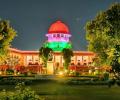
The Centre has asked the Supreme Court to reconsider its judgements decriminalising adultery and same-sex relationships, arguing they were based on a subjective application of 'constitutional morality'.

Champion Jannik Sinner ended one of the feel-good stories at this year's Wimbledon when he tamed big-serving German warrior Jan-Lennard Struff 7-5, 7-6(4), 6-3 to reach the semifinals on Tuesday.

In a statement issued following the announcement of the US-mediated deal, Qassem characterised the agreement as a 'humiliating' and 'shameful' surrender of Lebanese sovereignty that prioritises Israeli and American dictates over the nation's independence.

The 42-year-old, who has had stints at Microsoft, Facebook and Twitter, made the announcement of leaving his role as Senior Policy Advisor for Artificial Intelligence in a post on X on Saturday.

A sensational New York Times report alleging that Israel's Mossad secretly groomed former Iranian president Mahmoud Ahmadinejad to lead a post-Islamic Republic Iran is being scrutinised for its strategic timing amidst Iran's sensitive post-Khamenei transition.

'Our leaders, including Mallikarjun Kharge and Rahul Gandhi, are in touch with all Opposition parties, including the DMK and the AAP.'

For the foreseeable future, the most likely outcome remains continuation of the status quo. Taiwan will remain self-governing without formally declaring independence, while China continues to apply sustained pressure short of war, predict Krishnan Srinivasan and Manoj Mohanka.

Novak Djokovic defeated Felix Auger-Aliassime in a five-set thriller lasting over five hours to reach his eighth consecutive Wimbledon semi-final, setting a new record.

'It's really easy to get into and the kids love it.'

A three-day conference, "Dharma in the Digital Age 2026," is taking place at the University of Houston, bringing together scholars and scientists to discuss how ancient Dharmic principles can address contemporary ethical, technological, and societal challenges, including AI, digital governance, and sustainability.

The United States' World Cup campaign took an extraordinary turn on Sunday when FIFA made the unprecedented decision to suspend Folarin Balogun's automatic red-card ban, clearing the striker to face Belgium in Monday's last-16 clash after US President Donald Trump personally urged FIFA President Gianni Infantino to review the case.

Kylian Mbappe scored two goals, leading France to a dominant 3-0 victory over Sweden in the World Cup Round of 32. This win maintains France's perfect record and sets up a last-16 clash with Paraguay, with Mbappe continuing his impressive World Cup scoring streak.

Before Diego Maradona's famous blue shirt became a $9.28 million auction item, it may have had a humbler beginning in Tepito, Mexico City's market district.

French Open runner-up Maja Chwalinska crashed out of Wimbledon in the opening round following a 2-6, 7-5, 6-2 loss to Thai qualifier Mananchaya Sawangkaew on Monday after the Pole fell and hurt herself while on match point.

Immigrants' contribution to the US economy is disproportionate to their share of the population, meaning that losing them would shrink the economy even more than losing a random group of Americans, points out Sree Sreenivasan.

Defending champion Coco Gauff was defeated by Anastasia Potapova in the French Open, with Potapova winning 4-6, 7-6(1), 6-4 to advance to the fourth round.
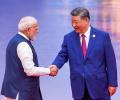
India's dual pursuit of a robust strategic partnership with Washington and a pragmatic, tension-management policy with Beijing represents the essence of modern multi-alignment. By embracing economic pragmatism, learning to compartmentalize political differences, and engaging in continuous dialogue, India can secure its borders, grow its economy, and contribute to a stable, multipolar Asian century, points out Ambassador Rajasekhar.

US President Donald Trump announced a finalised peace deal between the US and Iran, set for signing on June 19 in Switzerland, with key figures like J D Vance, Steve Witkoff, and Jared Kushner from the US side, and Abbas Araghchi and Mohammad Bagher Ghalibaf representing Iran, alongside Pakistani mediators Field Marshal Asim Munir, Shehbaz Sharif, Ishaq Dar, and Mohsin Naqvi, playing crucial roles in the diplomatic breakthrough.

Naomi Osaka battled through a tough three-set match against 18-year-old Iva Jovic to reach the French Open fourth round, setting up a high-profile clash with world number one Aryna Sabalenka.

If Iran and Oman choose to charge a fee for rendering services to vessels using their territorial waters, so be it. The US is indulging in an irrationally self-destructive act, notes Ambassador M K Bhadrakumar.

The US Centers for Disease Control and Prevention, the Pan American Health Organization and the World Health Organization have all described the risk of Ebola to World Cup host countries as low, citing measles, COVID-19 and influenza -- which spread when large crowds gather -- as the most likely threats.

American industry groups sought punitive tariffs on Indian goods at USTR hearings, while Indian officials defended the country's manufacturing growth as demand-led and WTO-compliant.
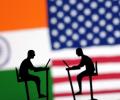
Commerce and Industry Minister Piyush Goyal announced that a US team is expected to visit India next month for trade talks, following an earlier Indian delegation's visit to Washington, DC, in April to finalise an interim pact and advance negotiations for a broader bilateral trade agreement.

Recreating this set is almost impossible since no two turquoise gemstones are ever alike.

American electric carmaker Tesla has launched the 2026 Model Y Premium rear-wheel drive in India, priced at Rs 50.89 lakh, making it the company's most affordable offering in the country.

India's procurement of Venezuelan crude oil has picked up momentum since April and the South American nation has already emerged as the third largest oil supplier to the country.
